Friday, 2 December 2016

Borneo


Borneo 29 October – 17 November

Three days to Borneo 29 October – 31 October

We were pleased to be under way again after our three weeks in Bali. It was 450 miles and would take three days and with the highest wind forecast of seven knots we would have to motor all the way.

Our first night was going through a group of islands a couple of hours after dark. With no moon we were not looking forward to negotiating unlit fishing vessels and nets strung between the islands. We slowed to 3 knots and Catherine sat on the front for two hours with a torch trying to spot any nets and keep an eye out for fishing boats. The boats will put on lights as you approach but only at the last minute giving little time to react and see which side of the boats the nets are set out. However, we managed that without incident and joined the main shipping channel around midnight.

With a five knot breeze coming from behind almost exactly cancelling out any breeze from our forward motion meant the next day was stifling hot on board. However, the following morning the wind came up to fifteen knots and we were under sail once again at 7am. I was on a radio call at 8am when Catherine shouted out that the wind had come up to twenty six knots and was now coming from ahead – a one hundred and eighty degree shift with a big black could overhead.

We sailed off course for a few minutes while I explained to Catherine that it was just a passing squall and we would be back on track shortly. Thirty minutes later and with the wind at thirty five knots and forced to sail down wind, my predication seemed a little shaky. The wind gusts of forty five knots did not help either. We battled to reef the sails and get the boat closer to our intended track –the exact opposite way to where we were now sailing.

After four hours the wind had calmed down to twenty knot but still directly ahead of where we wanted to go and we tacked into a heavy sea making little progress. However after six hours we were back to where we started that morning but now pointing in the right direction at least. It was our first experience of the monsoon weather at sea and was not to be the last. But at least it taught us to be more careful and reef at the first sign of the wind rising under dark clouds! Something we had not had to think about for many months.

Kumai 2 – 7 October

The main reason for going to Kumai was to take a three day river trip on a Klotok to see the Orangutans in the wild – one of the only two places in the world that you can see Orangutans (the other place is Sumatra but not a safe island for sailors). The boats are wooden and take up to six people, sleeping on mattresses on the deck under mosquito nets. All very basic but that is part of the attraction.

An enjoyable lunch on board
Setting off for our three day trip
We were with two other couples – a couple from Hungary who are sailing around the wo
rld and a German couple who were back packing around SE Asia. We joined the boat at 10am and set off for the 30 mile trip up the river.


Our first sight of the Orangutans

The first day we stopped at the first of the three feeding stations where the rangers put out bananas to attract the Orangutans – it is a supplement to their diet which they are given once each day, mainly so the tourists can see them. The rest of the time the Orangutans feed themselves.

Male Orangutan watching us
We waited some 30m away from the wooden platform which was some 2m off the ground where the rangers put out the bananas. Along with about 20 other people we looked up at the trees to see one or two female Orangutans coming to feed. While we were all watching the trees, a male Orangutan had walked up from behind to join the crowd and just stood there looking annoyed – he certainly got the crowds attention followed by a quick retreat. The male is about 5 feet tall and weighs over 200 KG with the strength of eight men and dominates his territory. They can become aggressive and the rangers are trained to manage them. The female is about 4 feet tall and only has the strength of four men and will roam between territories. You do not want to get into a tangle with any of them.

A wary female grabbing some bananas
When the male sat on the platform to eat the bananas, all the females were very wary and kept a safe distance. He was obviously feeling frisky and suddenly shot up the tree and grabbed a female from high in the trees and dragged her down to the platform whereupon he furthered the species while at the same time carried on eating bananas. We all felt a little like voyeurs but it did not stop everyone taking lots of pictures.


On we go

Cruising up the narrow river
While we were cruising up the river, we saw some Orangutans in the trees, lots of monkeys and enjoyed the trip up the narrow river deep into the jungle. The second stop was for dinner and the night hike into the jungle. The main attraction of the night hike was to see tarantula spiders which are nocturnal and live in burrows at the bottom of the trees. Slightly disappointed to learn that they are not deadly to adult humans as depicted in the movies but nonetheless we kept a safe distance. After the hour’s walk it was back to the boat, some tea and bed.
 

Very relaxed
We set off again at day break to continue up the river, branching off the main river into a tributary which was clean, clear water in contrast to the muddy brown river we just left. It was relaxing just to enjoy the trip through the jungle and look at the wild life.

The second feeding station was similar to the first but this time the male decided to grab a female by the leg and drag her into the bush for a little privacy.


Male ignoring a brave female
The final feeding station was also the scientific station where they have been studying Orangutans for thirty years. We spent an hour learning about their habits before once again venturing to the feeding station. The monsoon rains cut short the trip but not before a female Orangutan terrorised some of the tourists by joining them on the seats provided.


That night we were allowed to shower on board since we were in clean water and the shower uses the river water. It was cold but very refreshing after two days in the heat and humidity of the jungle. In the morning we saw a crocodile in the river just ahead of us before we set off.

Monehy landing in the water
Group of Monkeys high in the trees
On the way back we came across a group of monkeys in the trees ahead of us and as we approached, they started diving into the water from high in the trees and swimming across the other side. They spray out their arms and legs as they dive and curl up just before they hit the water – they swim as well as I do (not very well that is). It is quite a common sight as the engines of the Klotoks scare the crocodiles and the monkeys know that it is safe to swim across at that point. Definitely one of the highlights of the trip.

Traditional village
Woman fishing in a canoe
It was also fascinating to see people still living in the jungle.  We came across some small settlements and people carrying on their traditional way of life including fishing in crocodile infested waters!


Back to Kumai

We spent one more day in Kumai – there is not much to recommend it as a town but we did need some fresh provisions. The next day we set off for an overnight sail to Ketapang.

Ketapang 8-10 October

We were catching up with the rest of the rally at Ketapang after two weeks on our own. We had an interesting tour of the town with Gary and Bev from Wirraway, visiting the Buddhist temple and eating at one of the local restaurants. We allowed our guide to choose the restaurant – it had to be where locals eat and we fancied a beer with lunch. Despite carrying an advertising banner for Bintang Beer, the restaurant did not have any but they did send someone out to find some. The guide also chose the dishes for us to give us a range of local foods that we may not have chosen ourselves. A good choice apart from the crabs which turned out to be more expensive than any meal we had eaten in Indonesia so far. A little bit of a shock but still cheap by western standards. Nonetheless a very enjoyable meal and the guide was very good at explaining the history and culture of Borneo.

Sukadana 11-15 October

Sukadana was just a few hours’ sail further north and who were hosting the Sail Kalimata event. This is an annual event held in different parts of Indonesia with each host town receiving investment in the infrastructure in the run up to the event which was evident from our visit. It was a big attraction for Indonesians with the President attending the final day and we were to be guests of honour.

Newly built Mosque the President was to open
We had arrived a day earlier than expected but the locals hastily arranged some coach transport so that we could have a tour of the place in the afternoon. Eight coaches had been shipped in from Java for the visiting dignitaries (including us) since they do not have coaches on the island. The army presence in the town was very visible with soldiers posted all along the streets and the navy had five boats out in the bay to secure that area ahead of the President’s visit.


The next day we were invited to watch the dragon boat races in the bay. Lots of teams competed and a huge crowd were in support for this traditional event. The boats that went out in the lead were the one that rowed with a consistent rhythm and as a well-co-ordinated team - easy to spot.  However, we were too far from the finish line to see who actually won and the commentary was in Indonesia so we could only speculate who we thought had won. 

In the afternoon we were all asked to re-anchor our boats in the bay further north as the navy wanted to secure the area. We all re-anchored and they had even built wooden jetty for us so we could tie up our dinghies.


Cutting down the welcome sign
The coach trip the next day took us to a beach (they assume that all westerners like beaches) and to a Balineese community for traditional dancing and lunch. Clearly they do not have many coaches taking this trip since it could not get under the welcome sign to the village! Undeterred, the locals climbed up and cut parts off the structure to allow the coach to get to the village. This community was one that was displaced from Bali (not by choice) and had resettled on Borneo and now live peacefully with everyone else.


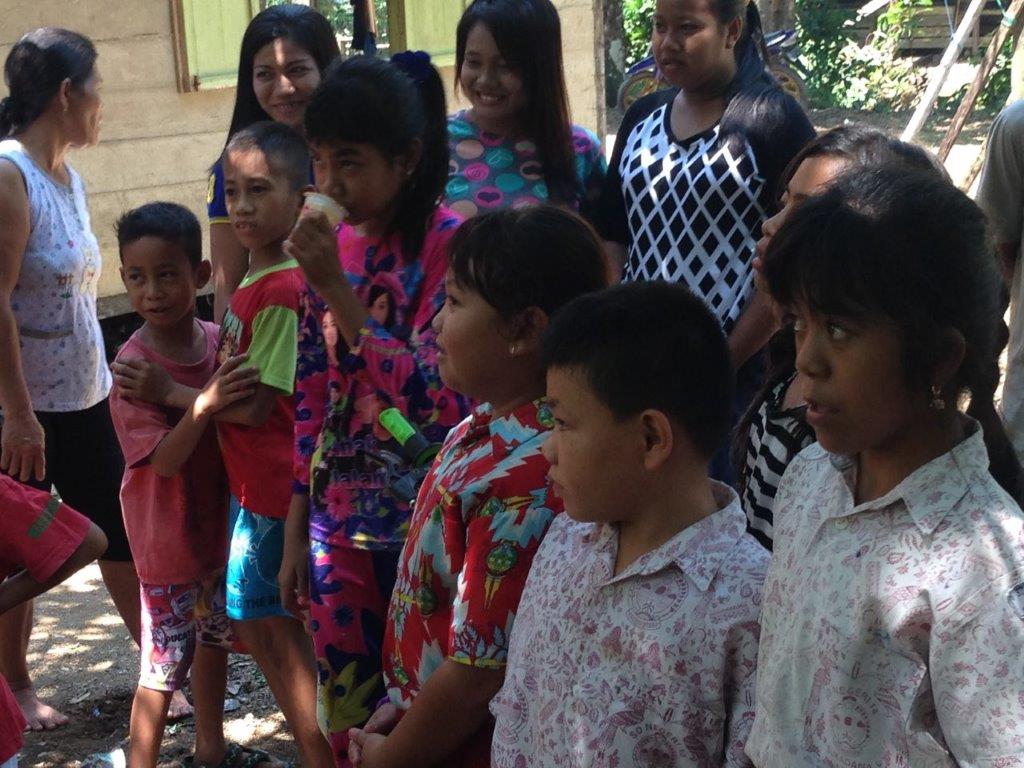
Children fascinated by their visitors
Traditional dance costume
They are very proud of their culture and maintain their traditions as we have seen all across Indonesia. They dance with such enthusiasm and passion from the youngest child to the eldest adult and the food was excellent. Very few people see these remote villages and it always feels such a privilege to see their traditional cultural events put on just for us.


On the way back we stopped at a water fall, or rather the start of the trail to the waterfall. It was a two hour climb and we only had one hour there so no way could be actually go and see it. In fact the guide admitted he had never seen it as it was too far! That is when we got the first telephone call to say that one of the boats had dragged in the anchorage.

A Quick Return

Five minutes after the first call we had another call to say that more boats were dragging in the anchorage and there was only Paul and Christian left in the anchorage with thirty boats at anchor. We all immediately returned.

In all five boats had dragged including us. Two of us had hit the same catamaran (Soul) and we had also hit the other boat that hit Soul since they had come to a stop next to them, catching on their anchor chain.  Between us we had caused considerable damage to Soul’s topside – it was a shocking sight. The other boats that dragged were luckier and had somehow missed hitting any of the others.

Mike and Sarah from Soul were clearly shaken and upset but came over to us to check we were OK. Sarah commented that if we had not hit them, our boat would have been on the rocks and so some good had come out of it. Catherine and I were both very upset, causing damage to a friend’s boat and also it had been the first time we had ever dragged. We could have easily lost the boat but for the quick thinking of Paul and Christian who had only remained on their respective boats because both of them were ill and so had not come on the trip.

We re-anchored our boat and put out 40m of chain although only in 5m of water. The next afternoon we had similar conditions with steep waves entering the anchorage (although little wind) causing the bow to dip down below the water and snatch up at the anchor. Once again we started dragging and we left the anchorage and went back to the first anchorage which was more sheltered. I was ready for any discussion with the Navy about anchoring there!

We were quickly followed by every other boat, many of whom started dragging in what was exceptional conditions – I have never seen such steep waves so close together before. The jetty that the locals had built for our dinghies also suffered a lot of damage and had to be rebuilt. Needless to say we did not leave the boat unattended the rest of the time we were there.

I spent a couple of mornings on Soul helping to fill the topsides with epoxy to at least make the holes waterproof. It was never going to be anything but a temporary repair but at least the boat would be seaworthy once again. Having made sure we had done everything we could, we did not wait for the President’s visit but set off for the island of Kalimata which was about 40 miles away in clear water and more importantly it was sheltered!

Kalimata Island 16-18 October

A couple of days at anchor in calm weather and clear seas helped calm us down before we set off for the twenty four hour sail to Parai Beach. And for a change we had good wind and sailed all the way – the first time for almost two months.

Friday, 28 October 2016

Bali Indonesia


Bali - 12 to 28 September

Bali is the holiday island for Australia and hence is a well-developed tourist island. It is mainly a Hindu island with about 20m people living on the island. We were staying on the north side which is the less developed side of Bali – the main resorts are all in the South. 

Amed 12 – 13 September
One of the better marked FADS

Amed was our first stop as it was just a day sail from Lombok and we could only sail during daylight  - there are lots of fish attracting devices (FADS) along the north shore and it is not safe to sail at night. We anchored off the beach and we received a vhf call from the other two boats in the anchorage who were enjoying a beer around the pool in one of the resorts. 


We had dinner on the beach and for the first time it felt like a holiday. There were quite a few tourists staying in the town although it is described as an alternative backpackers place for hippies. I cannot say that I would have described it as such, there was not much alternative about the people we met – just normal tourists. A very pleasant evening even if the food was not that good but the setting made up for that.

Lovina 13 – 16 September

As soon as we anchored in Lovina,.we took all our forms into the local agent for the visa renewal and were told that we would have our fingerprints and photos taken by immigration two days later, on Thursday. Immigration offices are only open Monday to Wednesday so that was never going to happen!  But then nothing happens here when it is expected and we were not that surprised

Band playing on the beach
The festival was on in Lovina for the first two nights with lots of stalls selling clothes and food with bands playing on the beach in the evening. It was very lively and crowded as it was a big draw for both tourists and locals in the area. The rally boats quickly adopted one of the local bars as the meeting place, mainly because it had a two for one happy hour on cocktails between 6pm and 8pm. We made good use of that facility over the time we were there!

We spent our time sorting out a trip to Sideman Valley (the traditional Bali) and looking at the options for getting to Borobudur on Java. Finding out the options is something that Catherine has more patience with than me and helped by Pepe and Bear who were going with us.

Sideman Valley 16 – 19 September

Sideman Valley
Hiring a car would have been an option to get to Sideman Valley, but not a good one. The cost of hiring a car is £30 and with a driver is £36 per day and you need nerves of steel to drive here. I am sure they must have some rules of the road but we could not work it out. At least they are very calm drivers - cars overtake into on-coming traffic on narrow roads and move in just before the head on collision without even a horn being sounded or a raised fist. Similarly, cars will turn right across the on-coming car which will just slow down and let them turn. Good decision not to drive ourselves.
The journey was to be 4 hours and the driver suggested some stops along the way.

Stopped for a Coffee

On the way we stopped at a Coffee plantation since we had never seen one. The guide was very
Luwak Coffee
Coffee beans growing
informative as he showed us the beans growing and how they dry and roast them – all by hand. We were also introduced to Luwak coffee which is the most expensive coffee in the world and it shows you can market anything. The coffee berries are eaten by the Civet, a cat like animal, and the beans are not digested but ferment in their stomachs before being passed out in the normal way. People collect the Civet poo, wash the beans clean and then put it in the sun to dry for a couple of weeks. It can then be roasted and sold as a premium coffee.

Catherine sampling the coffee
We sampled a variety of coffee, the variety coming from what they put with it e.g. vanilla. TheLuwak coffee was much stronger, bitter and none of us liked it. Just as well at the price they charge even here.


We are not going to the Temple

Impressive temple
We all agreed we did not want to go to the Hindu Temple (the largest in Bali) as we had heard people are scammed for money. We agreed with the driver we would just drive past it so we could see it but not stop. However we found that you have to pay the entry fee even just to drive past it so having paid we decided to go in.


Our tickets were collected at a booth on the walk to the temple. We had gone about 100m before we were asked for our tickets again and told we would have to pay as we did not have them. We explained to no vail so we just carried on walking past them while they shouted at us. Not a 100m further on we were told we could not go in without a guide (more money) but we had been advised of this scam by some other tourists we had met on the way. So again we kept walking while being chased by some angry guides. And we were approached by another two people with the same story but less vehemently as we were getting more than a little annoyed by this time. The temple was large and the advice “that it is not worth the hassle you will get” was well founded.

Three Nights in Sideman

Our "villa"
The two villas in the place we stayed were rustic but comfortable and nestled among the paddy fields and the mountains. It was much cooler in the mountains and the pool was a welcome relief in the heat of the afternoon.

The village of Sideman is small with a few restaurants and some other villas, but is mainly a farming area – rice, chilli, peanuts and beans. The two aspects sit side by side: the small number of expensive villas and restaurants alongside the subsistence farming. The locals welcome the small tourist places as somewhere they can earn money away from the farm (often combining both jobs) and the tourism is very small compared to the more developed parts of Bali.

The first day we explored the village, about a ten minute walk away, and it did not take long to walk all the way through the village – it is very small. After a very pleasant salad for lunch (something that we have missed since leaving Australia – salad that is), we relaxed in the pool before going out for dinner.

We chose the restaurant on the basis that it served cocktails (not normally a good criteria) as a change from Bintang (the local beer). However the food turned out to be excellent in an attractive setting and it made for a very relaxing evening.

The next day we hired some scooters to explore the area with Bear taking one (while Pepe relaxed by the pool) and Catherine and I on the other. Our first stop was in the village to go on a guided tour of the paddy fields, something we were all keen to do since we did not understand much about rice growing.

Irrigation System
Planting out the rice
We spent three hours walking through the paddy fields with riceat all the different stages of growth. We watched just how hard it is to farm rice, ankle deep in water with the hot sun blazing overhead. And while it is a staple food in Indonesia, the price on the market is very low and the farmers do live a subsistence life style.


Ploughing the rice fields before planting
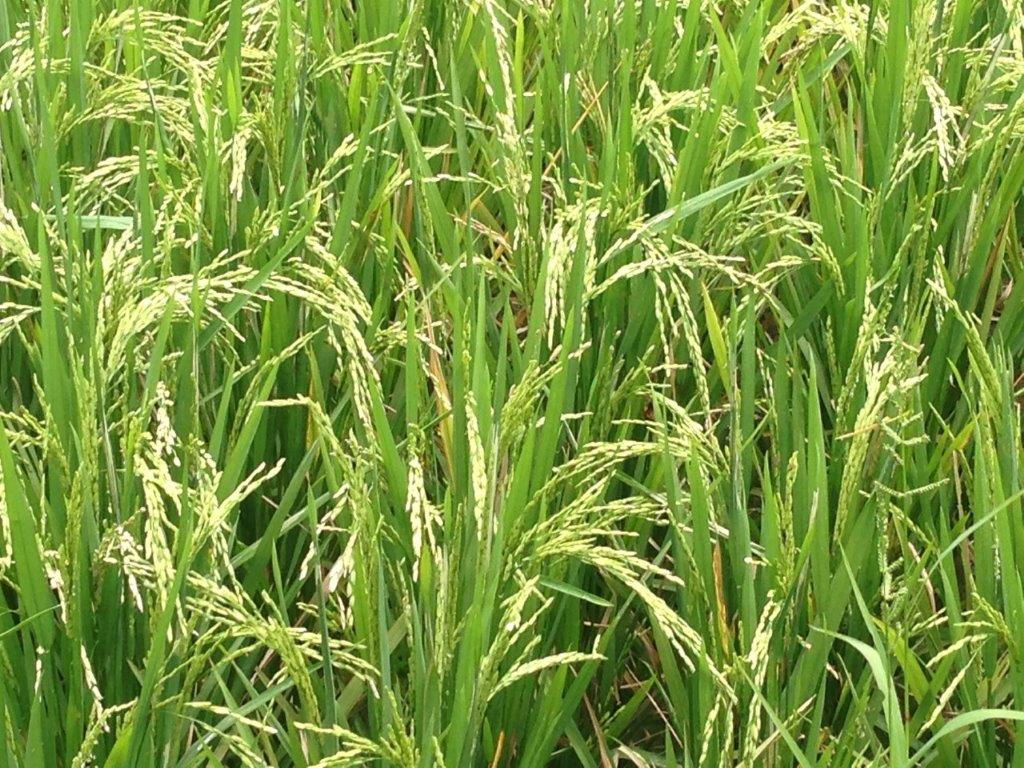
Fully grown rice
Rice takes about 4 months to grow and the crops have to be 
alternated with other crops such as peanuts, chilli and beans to allow the soil to dry out and recover before the fields are once again flooded for the next crop of rice. The system of irrigation is interesting in itself, with canals cascading the water down from the top of the valley through all the fields, with the ability to control the water supply to any one field.


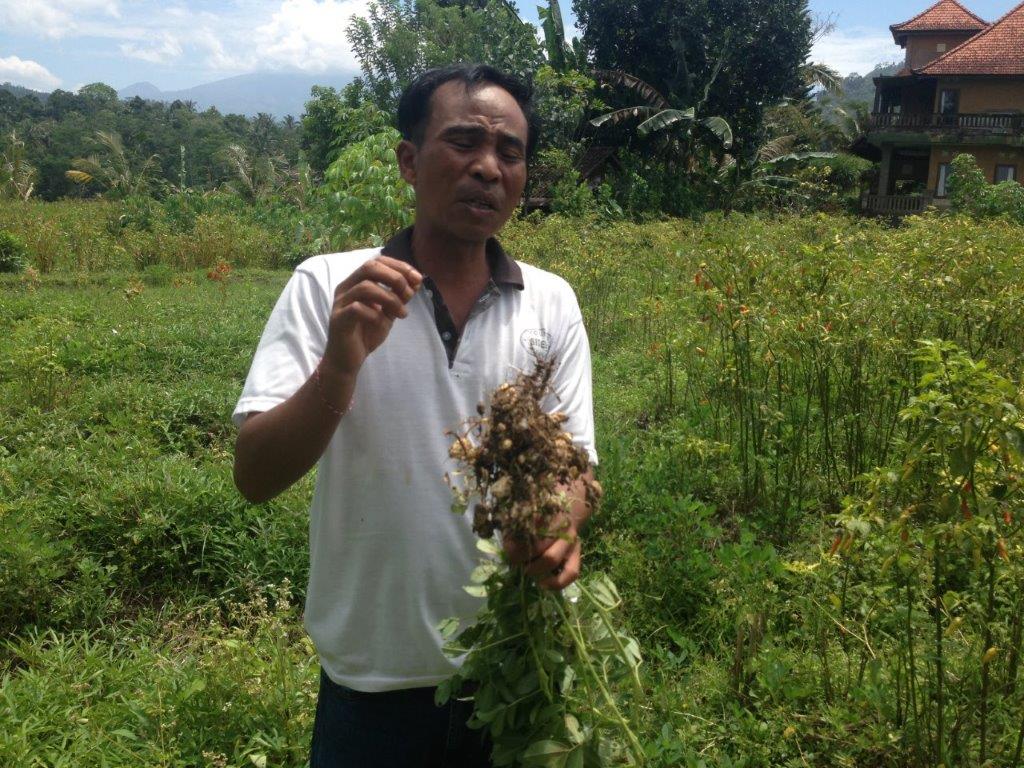
Peanuts freshly picked
We sampled many crops along the way including eating raw peanuts directly picked from the ground. Surprisingly tasty even before they have been dried out in the sun for 11 hours before being roasted.


Our bike trip continued up the mountain to go to the temple at the top. As the roads got steeper and steeper we passed a group of young boys who had stopped their bikes and they shouted to us as we passed, making thumbs up gestures which we did not understand. Two hundred metres further on we ground to a halt as the bikes could not make it up the increasingly steep slope and we were passed by the group of boys on foot who clearly knew that it was not possible to ride a bike up that hill. They were very friendly as they passed, taking the obligatory photos of us as they walked past.

Back to Lovina 19 – 22 September

A few days back in Lovina to get our visas completed, explore the town some more and stock up on a few essentials including bread from the bakers – the first since we arrived in Indonesia.

Java 23 – 26 September

We flew to Yogjakarta on Java to see the famous Buddhist temple at Borobudur and the Hindu temple in Yogjakarta itself. The hotel was in the grounds of the Buddhist temple and we planned to get up at 4am to see the sunrise over the temple which was a short 20 minutes’ walk. However, that night the monsoon rains started and was quite spectacular, if a little wet. We did get up at 4am and immediately went back to bed on looking out of the window.

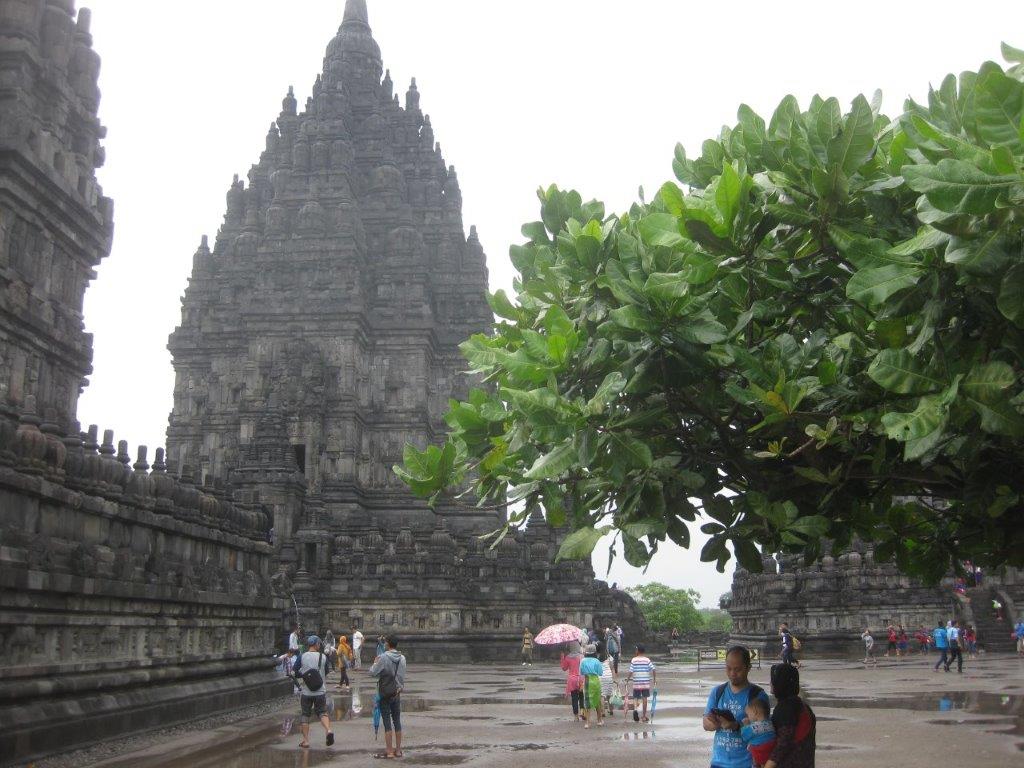
Buddhist temple in Borobudur
The school photo
Later that morning and early by our standards, we explored the temple, borrowing an umbrella from the hotel. It took us an hour to get into the temple after being waylaid by a group of school children who wanted to have their picture taken with us. And then we were invited to join in the group school photo before we managed to extricate ourselves and actually go into the temple.

The temple was built in 800AD and is a magnificent building, built on three levels on top of a hill. Each level has a series of carved pictures on each side of the walls and the idea was that the pilgrims would study the stories that these told as they walked around, spending weeks on each level before they were ready to progress to the next level. The highest level was achieved when they had achieved Nirvana but that could take a lifetime. People from all over SE Asia would travel to the temple and it was famous until it was forgotten and left undiscovered until the mid-19th Century.

One of the stories carved into the walls
It was four hours well spent, helped by the documentary we had seen in the hotel the night before which explained some of the stories contained in the pictures. It was fascinating to find the pictures and have some understanding of their significance.

We strolled into town to find somewhere to eat and it did not seem well set up for tourists given it is right next to the 2nd most visited site in Indonesia after Bali.

The Hindu Temple

The Hindu temple still being restored
The next day we took a taxi for the forty minute drive back to
Yogjakarta and stopped at the Hindu temple on the way. Built around the same time as the Buddhist temple it was not as impressive and looked much like the many other temples we have visited. And the two hour monsoon rain during our visit which flooded everything did not help.

Armed with a newly bought umbrella we set off in the afternoon to explore Jogjakarta, a major town. On the way we stopped at a traditional restaurant (a must do according to the Lonely Planet) and experienced the local delicacy – fried cow skin along with a range of other foods we did not recognise. Will not be eating that again!

In the Town, we were struck by the sheer number of people, cars and the upmarket shops sitting alongside traditional markets on a huge scale. As the rain started once again we made our way to a bar to sit out the latest deluge. There are many restaurants and bars in Yogjakarta, catering for tourists from all over the world.

A little downpour
The local transport
With the rain showing no signs of stopping, we took the local
transport back to our hotel – a type of rickshaw with some poor and very wet person peddling the bike while we sat under the plastic sheeting at the front.


Catherine had picked out a Mediterranean restaurant to visit that night and once again we were forced to take the local transport to keep dry. The restaurant would not have been out of place Europe with its western type menu and décor and it made a very pleasant change from eating in the  normal local restaurants.

Back to Lovina 26 – 28 September

We had planned to leave the next day but I had succumbed to the local food from Yogjakarta. I was convinced I was about to die but Catherine assured me I would be fine, just drink water and not eat which I did. She turned out to be right and we set off for Borneo a few days later.